Pages

Wednesday, 1 May 2013

Lomo Photography

I've been keen on photography since I adopted my mother's Agfa Instamatic at the age of ten, and while I usually use digital (a Canon 400D, Canon Powershot A810 or my Samsung Galaxy S2 being preferred cameras), I've had a Pentax ME Super for a few years too. There's just something about the quality of the images that you can't achieve with digital, even using Photoshop.


I took this image of the fountain in Trafalgar Square, and managed to use a long enough exposure to give the water the milky texture so intrinsic to photos of water. Using ISO400 film meant that there was enough grain to give the image the sort of noise that you'd normally avoid in digital photography, but which works so well with film.


I took this image inside the Natural History Museum using Ilford's black and white film. Most film labs now process black and white film in colour fluid, which gives a reddish-brown tinge to black and white. I love monochrome photography anyway but this particular effect just seems so much richer than anything I could achieve in Photoshop.


I've been fascinated for a while by Lomo photography, which is the form of film photography which uses plastic 'toy' cameras, complete with defects such as light leaks, or strange colour effects. I took this shot at Woodhorn Colliery near Ashington and the fact it's slightly over exposed gives it a strange, eerie feel, while the overcast sky has a pinkish colour cast. I love the square frames of lomo photography, and it's amazing how simply clicking a button on a tiny camera gives me a more organic feel than anything I might throw together in Instagram.


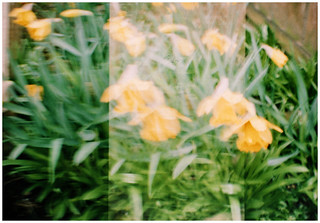
I took this shot of the daffodils in our back garden, and it's obvious that I've quite monumentally screwed it up. I was shooting square frames but I wasn't advancing the film enough between shots, meaning I got this strange, ghostly effect as the centre portion is double exposed. The fact the film was exposed twice explains why it's brighter, as more light has been let in, and the image is slightly blurred as I had the camera on the wrong shutter speed, meaning I had too much motion in the camera at the point of exposure.

I think, in all honesty, that I prefer my Pentax as the picture quality is much better, and naturally the controls are more extensive - I have more than two shutter speeds, two apertures and four focal points to choose from. But at the same time, my Lomo is smaller, it doesn't require batteries, and there's something organic about the pictures that I want to experiment with further. Watch this space!

Monday, 22 April 2013

Drawing Cartoon Characters

I recently treated myself to a Wacom Bamboo Tablet with this weird notion that I'd be able to turn my hand to digital painting. Sadly my artistic style doesn't seem to lend itself well to what I want to be able to do, so I ended up just doodling my usual type of character, and I thought I'd go through my process to show how I got from start to finish.

I flood filled the background with pale grey, and on a new layer, sketched this out loosely with a small, hard-edged round brush using black.


Now I created a new layer between the background and the black lines, and used a larger brush to colour the character in mid blue.


With that done, I created a new layer between the blue layer and the lines, and painted in shadows with a darker shade of blue and a soft-edged brush on a low opacity.


I repeated the last step, albeit this time using a lighter shade of blue to give highlights. Et voila!


What about you? Have you ever used a graphics tablet, and if so, did you find it difficult to get used to?

Sunday, 7 April 2013

Quickly Lighten a Night Time Shot

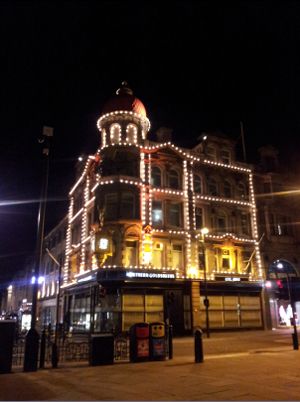
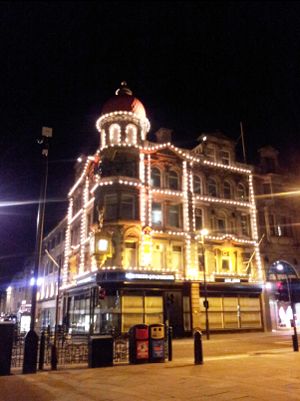
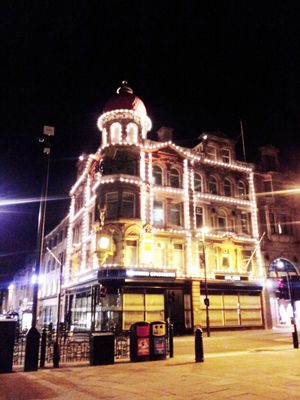
It's always a shame when you take a photo at night and find that even if you used a decent shutter speed or a flash, the image is still a little dark. So today we'll have a look at a quick and easy way to lighten your images in Photoshop. I'm using an image of the Northern Goldsmiths jewellers in Newcastle upon Tyne.

Open your photo. You won't get very far if you don't.


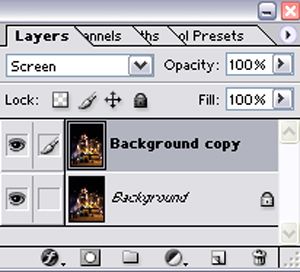
Now, duplicate the layer. Either drag the Background layer down to the New Layer icon, or just press Ctrl+J/Cmd+J. Set the blending mode of this layer to 'Screen'.


It already looks lighter, but we need to do a bit more to it to improve its look.


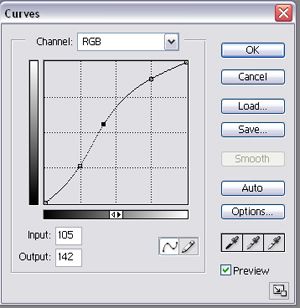
Click on the Adjustment Layers icon at the bottom of the layer palette and select 'Curves'. Give yourself an S curve a bit like this, to boost the highlights and darken the shadows.


The settings you choose will depend on your image, but an S curve of some description is a pretty safe bet. You'll get an image with more contrast. It already looks less 'flat' than the image that came out of the camera.


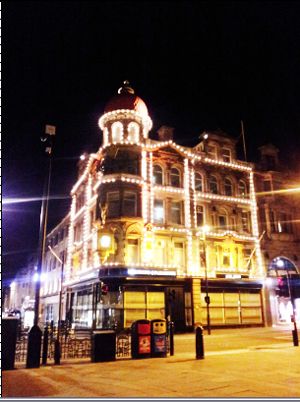
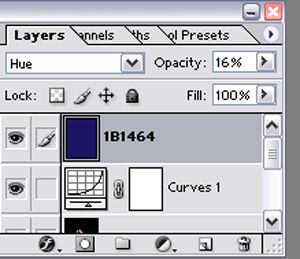
It's kind of yellow, which you could fix by altering the colour balance with a new adjustment layer, but I want a bit of a 'filter' effect. I've created a layer that I flood filled with dark blue (hex code 1B1464). I set this to Hue and lowered the opacity.


You should end up with something a bit more like this!


And there you go! It's such a simple technique, and by altering the curves or using different coloured overlays, you can achieve all kinds of effects depending on what you're going for. Have fun!

Thursday, 1 November 2012

Creative Postcards

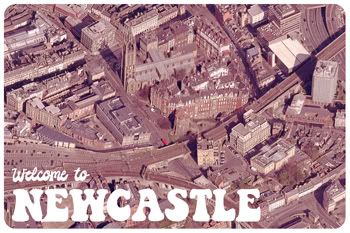
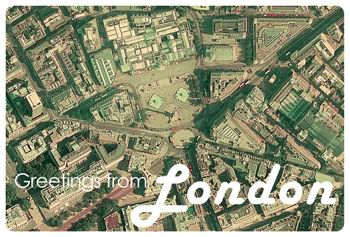
I came across this post over on Creative Bloq (and subsequently followed it through to Akos Papp's Postcards From Above blog) and I was so impressed with the range of postcards that he's created that I thought I'd have a go at my own. I've only done two, of Newcastle upon Tyne and London, but in both cases I've tried to pick specific locations and an image treatment/font combination that 'ages' them.


In Newcastle's case, I've gone for a faded pink/red colour cast so typical of the Seventies, and I've gone for a retro font treatment to go with the colours. The view is from Google Maps and depicts the train line that runs through Newcastle, with the Castle Keep, Vermont Hotel and Moot Hall to its south, with the Black Gate, Milburn House and St Nicholas' Cathedral to the north.


In the case of London, I went for a more faded, vintage colour, and a Fifties style font to match the colour. The view is of Trafalgar Square, with the National Gallery in the top centre of the image. It just goes to show that you can find source material in all sorts of places.

What do you think?

Wednesday, 17 October 2012

Liven Up A Photo

Sometimes you can take an image on a camera phone, and it looks perfectly alright on the screen, but you look at it on your PC and suddenly you notice it's a bit flat. It's easy enough to 'pep up' a slightly faded looking image, and I've done it here in just three steps.

I took this image of the sun rising over the field I pass on my way to work. It's nice, and the one advantage of the shorter days is I'm actually up in time to see sunrise.


Still, things could be improved. A couple of colour balance layers bring out the blue in the sky, and put the green back into the frost-encrusted grass.


I like that lens flare that the camera naturally introduced, but a tad more won't go amiss.


And finally, a vignette to drive the eye inward.


Yes, Instagram can do all these fancy things to your images, but instead of automated filters, isn't it nice to just do it yourself?

Wednesday, 10 October 2012

Changing the Weather

Following on from the digital rain tutorial that I posted last week, I thought I'd share a short process for how I drastically altered a stock image.

I started off with an image of a road and a rainbow from Sxc.hu.


Then I removed the rainbow, cloned out the people on the left hand side, cropped the image to remove the sign to the left, and darkened the whole image using both Levels and the Brightness/Contrast function as adjustment layers.


Next I added storm clouds from another stock image, this time on a new layer set to 'Multiply'.


Then I added my first layer of digital rain.


And another, this time set to 'Multiply.


And finally, a dark vignette around the edges!


Wednesday, 3 October 2012

#Tutorial - Digital Rain

Every now and then, it's nice to be able to change the weather. Sometimes taking photos of rain doesn't quite work, so in this tutorial, I'll show you how to add artificial rain to an image. This will either boost any existing rain, or change the weather altogether! I'm going to use this photo I took on the North York Moors.


Now, duplicate the layer (Ctrl / Cmd + J). Go to Filter > Add Noise. Choose Uniform and Monochromatic, and a fairly high number.


Now go to Filter > Blur > Motion Blur. I've chosen an angle of 60o, but you might want to have the rain slanting in a different direction. Experiment with the amount until you get something similar to this.


You'll have an odd border where the blur has faded out, so hit Ctrl/Cmd and T to bring up the Free Transform option. Drag the blurred section so the border is beyond the edge of the image. Hit Enter to accept the change.


Now you'll need to alter the opacity, or change the blend mode, to make it look like rain. I have mine set on Vivid Light at 99%. Voila! Digital rain!


If you've had a go, post your result in the comments so I can have a look!